Month: December 2017

Penang / Cameron Highlands, Malaysia

Malaysia was quite a change after after Vietnam, Laos, and Thailand. Pretty much everyone speaks English, and no more Tuk Tuks. Also, everywhere we went was packed with tourists, but not western tourists. Tourists in Malaysia (at least in December) are mostly from other parts of Malaysia or Singapore.

We were here during Durian season, and the smell of durian is everywhere. Durian is now trendy, and there are people selling it out of the back of their trucks everywhere. I don’t mind the smell, but a lot of people don’t like it.

We stayed in a huge AirBNB in George Town on Penang Island. 3 bedrooms, 2 bathroom and a huge herb garden for $27/night. It was in a quiet neighborhood a 10 min ($1.50) Uber ride from everything.

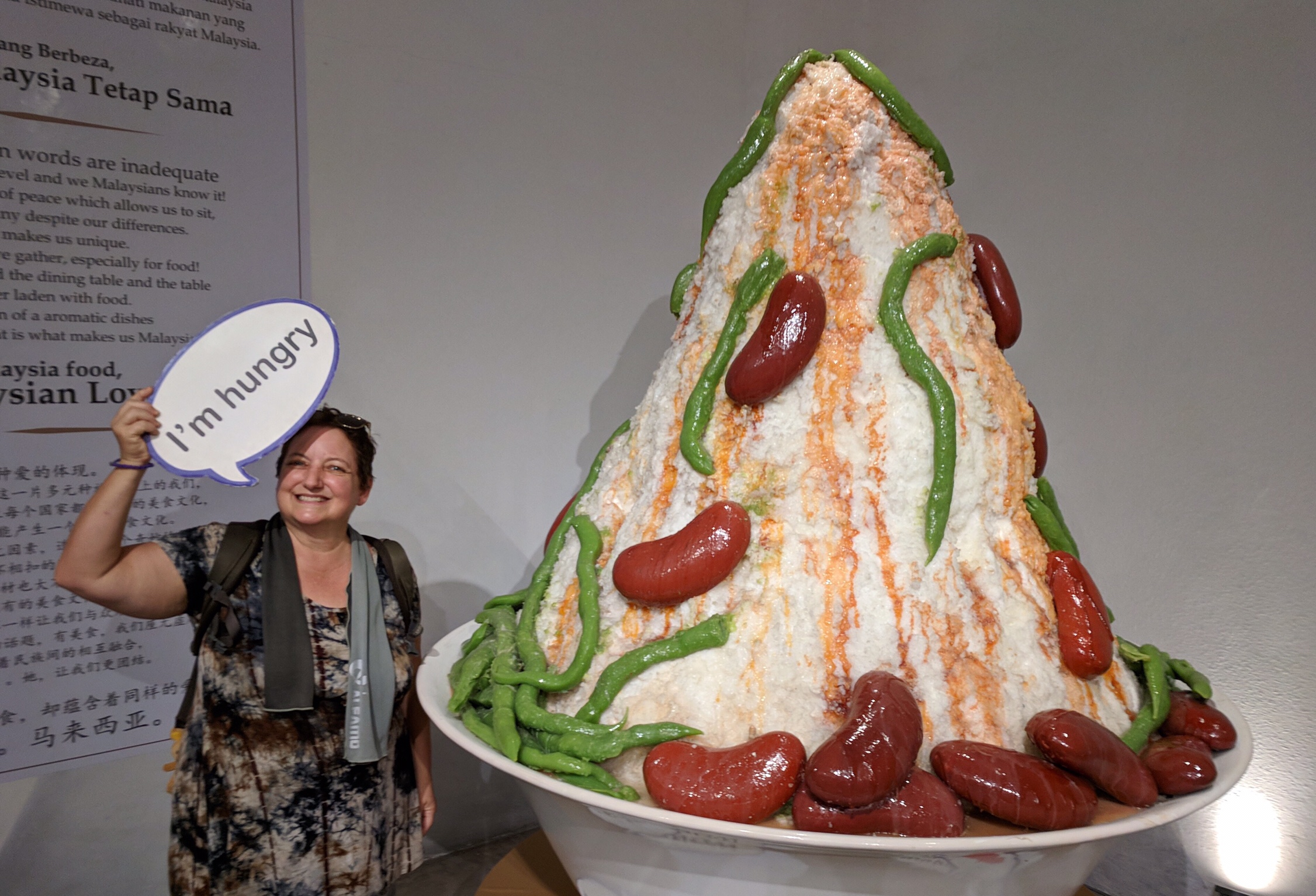
There are a number of good museums in George Town such as Pinang Peranakan Mansion, and some great hiking in the nearby National Park. I did an excellent (and easy) bike tour on the back side of the island with great guides. And then there is the crazy WonderFood museum (photo below).

George Town is known throughout Malaysia as a food lovers dream, and locals are very proud of their food. People come just to eat at the ‘hawker stalls’ (photo below). Most everything is $1.50 to $2. Overall I think I prefer Thai food, but I like the greater diversity of food options in Malaysia. But be prepared for much higher prices for alcohol in Malaysia, as it is heavily taxed. For example, cans of Tiger beer in a supermarket are $2 each.

Here are a selection of our photos from Penang.


Next we took a bus to the Cameron Highlands. This area is full of tea plantations, vegetable farms, and more recently, strawberry farms. Cameron is the second place on our travels where it got even a little bit chilly at night (60 degrees F), the first being Sapa, Vietnam.

I did a fantastic guided hike with Jason, who works out of Father’s Guesthouse. Jason grew up in the Cameron Highlands, got a law degree in London, and speaks with a perfect BBC accent. He worked as a lawyer for the environment in Malaysia for 6 years, and then quit to be a tour guide instead. Much less frustrating. We learned a lot about jungle plants, and talked about environmentalism, politics, religion, and philosophy along the way. Be sure to take a tour with him if you find yourself there.

I also saw some incredible wood carvings at the Mah Meri Art Gallery. Check them out.

Here is a selection of photos from Cameron Highlands.

Posted by me in SE Asia, 0 comments

Foody Travel, or how to get the most out of local cuisine

For us, one of the main reasons to travel is to try new, interesting foods. Our goal is to try all the popular foods in every city we visit, and have been surprised just how much foods can vary between towns that are only a 3-4 hr drive from each other.

Doing this well requires doing some research on what’s out there, and what its called. We start by doing some background reading and YouTube viewing. Antony Bourdain shows (Parts Unknown and No Reservations) and “Migrationology” (videos and articles) are good sources. For Japan, “Trails to Tsukiji” is super interesting. But just searching for “street food CityName” in YouTube and Google often brings up some useful/interesting videos or articles. Use the YouTube download option to watch these videos on the bus to your next destination.

Its easy to get overwhelmed with the number of options for foods you’ve never even heard of. We recommend making a list of the things you particularly want to try, and checking them off as you go.

Next we try to find a street food / market tour. Many towns have street food tours these days, and some include a market tour, which is even better.

Some of our favorite tours so far were:

The website https://www.backstreetacademy.com/ is also a good source for food tours.

Some sample useful food pages include:

Many ask: “Isn’t it risky eating street food. Won’t I get sick?” In 4 months of traveling, we’ve only got mild cases of food poisoning twice each. I don’t think its all that much more risky than eating in restaurants. If you are worried, avoid raw vegetables/herbs and shellfish. And what’s life without a bit of risk!

Posted by me in General, SE Asia, 0 comments

Khao Sok National Park, Thailand

We spent a great, relaxing week at Khao Sok National Park. There are a cluster of resorts and restaurants near the park entrance, and all the resorts will book various activities. The main reason to go to Khao Sok is to do a overnight trip to Cheow Lan Lake (a reservoir) and stay in a bungalow on the water. Two day / one night trip including all meals, transport, guides, and bungalow was 2500 Baht/person. Our bungalow had a private bath, a fan, and generator power from 6pm till midnight. Not all tours included bungalows with a private bath, so be sure to ask.

We also visited the “Monkey Temple” (Wat Tham Phanthura) , which is a great place to watch monkey play. I did a ‘night safari’ guided hike thru the jungle, and got to see a bunch of cool spiders, lizards, and frogs.

We stayed at the Morning Mist Resort, and recommend it. They let us leave all our stuff in our room for free while we did the overnight trip to the lake. The best food in town was at Pawn’s Restaurant.

Some of our best photos of our entire trip so far are from our trip to the lake. The rest of our Khao Sok photos are here. We spent a lot more time in Khao Sok than necessary, but highly recommend the lake trip.

Our final night in Thailand was in Surat Thani, so we could experience the food at the fantastic night market (photos).

Posted by travel_b1p6zj in SE Asia, 0 comments

Ko Phayam (not Phangam), Thailand

Every time we told someone we were heading to Koh Phayam, folks asked ‘are you going to the full moon party?’

Ko Phangam (on the east side of Thailand) is famous for its all night parties, something we had no interest in. Ko Phayam, on the west side, is the exact opposite. Very few travelers we met elsewhere had even heard of it.

Ko Phayam only has about 200 residents (about 1/2 of which are Burmese immigrants), and maybe another 100 tourists while we were there. At the peak of season there might be 300 tourists. Most of the island shuts down 6-8 months per year during the off season.

Ko Phayam currently has no cars, and no roads wide enough for cars. Instead there are nice, paved, scooter trails. For me, that was one of the main attractions to the island. Unfortunately they have plans to build the first road across the island. While this may increase tourism in the long run, it will certainly chase away folks like me.

If you think you might want to check out Ko Phayam, note that the main island web site claims that the season starts in November, but many things don’t actually start until sometime between Dec 1 and Dec 15th. Good Cell phone coverage, Wi-Fi, and electricity more that a few hours per day are all new this year. Electricity is still pretty flakey, and went out for a few minutes several times per day, and is not strong enough to run air conditioners, etc. They are building a new generator for the island, so probably there will be 24×7 electricity next year.

A surprising number of people we met on the island come back every year, and there is a great live music scene at Irie Islands Music Bar run by a cool Japanese guy. There were very few Americans here compared to other places we went in Thailand, and LOTS of Germans.

We stayed at JJ’s Beach Resort, but if I had it to do over, I might have preferred to stay next door at Bamboo Bungalows (which had kayaks, massage services, and better food) or Coconut Beach (which had really nice staff and better food).

Unfortunately there was a LOT of rain the week we were there (we came a bit too early in the season), and there were lots of mosquitos. But overall a very nice relaxing week.

The sand crabs made amazing art on the beach twice a day after every high tide (see photo below), and I discovered the snapseed photo editor app ‘grunge’ filter (also see photo below).

Selection of other photos is here.

Posted by travel_b1p6zj in SE Asia, 0 comments

SE Asia Travel Advice

Now that we’ve been traveling for 3 months, I wanted to write up some general advice/insight.

Apps/websites

  • Booking.com: our favorite site for finding a wide range of lodging, and best search filter options
  • Airbnb.com: Best way to find a condo with a full kitchen, which is really nice once in a while
  • maps.me: Great offline maps app
  • Kayak: My favorite app for finding cheap flights
  • Google maps: Learn to use the ‘save for offline use’ and ‘starred locations’ features.
  • Uber/Grab: often cheaper than regular taxi’s, and you dont have to haggle. I prefer the Uber interface, as Grab sometimes got the locations wrong.
  • Google Translate
  • backstreetacademy.com:  Several of our favorite tours/classes were booked thru this web site. They specialize in ‘unusual’ activities. Klook.com has some good tours too. Some cities also have good AirBNB ‘experiences’.

Depending on exactly where you plan to go, you don’t need warm clothes. The most important thing is a good pair of shoes that can get wet and dry quickly. I LOVE my Keen Newport sandals, which are perfect in SE Asia. Pharmacies are everywhere and seem to carry every thing, so don’t worry about stocking up on meds. Bring a spoon and a small food storage box for leftovers. Help cut down on plastic bottle use and bring a water filter! A small roller bag is all you need. Laundry is cheap and easy everywhere. Usually about $1 per kilo. A good day pack is very helpful, as well as a small shoulder bag. A small Bluetooth speaker is nice if you want to listen to music in your room from your phone.

Here is really all you need in terms of clothing: 4 shirts, 2 pair shorts, 1 long pants, 4 underwear, 2 pair socks (in general you wont be wearing socks), 1 light jacket, Sun hat.

How to not burn out on a long trip

  1. Spend at least 1 day / week doing as little as possible. Just read, research your next destination, watch TV, etc.
  2. Try to spend at least 5 days in each city. Travel days are the most tiring, so try not to have too many of those.
  3. Try to get a place with a kitchen at least 1 week/month. Eating in restaurants all the time gets old. AirBNB is a good source for places with a kitchen.

Costs

In general here is what we have been spending in South East Asia:

  • Lodging: $20-30/night, mostly a room with AC in a small guesthouses, often includes breakfast
  • Local food: $1-$2 per meal
  • budget tourist food: $2-$4 per meal (places with English menu, and western options)
  • Taxi: $2 for 1-2 miles
  • Beer: $1-$2, cocktails: $3-5. (More in Malaysia, as taxes are higher. Less in Cambodia, where taxes are lower)
  • full day guided tours/trips: $20-$100, depending on on the tour
  • Flights: $50-$130 to get around within SE Asia. Anything over a 6 hour bus ride we flew instead.

Its also easy to spend $100 night for fancy 4-star lodging and $30-$50 for overpriced international cuisine if thats what you prefer, but why?

Mobile Data Options

  • Get a local SIM card: you can get a local SIM card with a reasonable data limit for $5-$10 everywhere, but then you have a new phone number in each country
  • Project Fi: works in 170 countries, $10/GB for data, unlimited text messages, $.20/min for voice calls
    • Advantages: It ‘just works’ almost everywhere in theory. In Vietnam it did not work, and while it was supposed to work in Laos, it didn’t. We could send text messages, but no internet. They added Myanmar just before we arrived.
    • Disadvantages: Must use one of 2 fairly expensive Android phones, and I really prefer IOS to Android.

We went with Project Fi, as we where going so many places and transiting thru Bangkok and Kuala Lumpur a couple times. It was really nice to not have to worry about getting/changing the SIM card all the time. Our monthly total cost for 2 people averaged around $70. But local SIMS are a lot cheaper. If you are just going to couple countries, I’d go with that option.

Posted by travel_b1p6zj in General, SE Asia, 0 comments